Call transcription turns a recorded call into text. The part that decides whether it is useful is everything around the text: whether it happens automatically on every call or only when you remember to upload something, whether it knows who said what, and whether you can find a sentence six weeks later without knowing which call it was in.
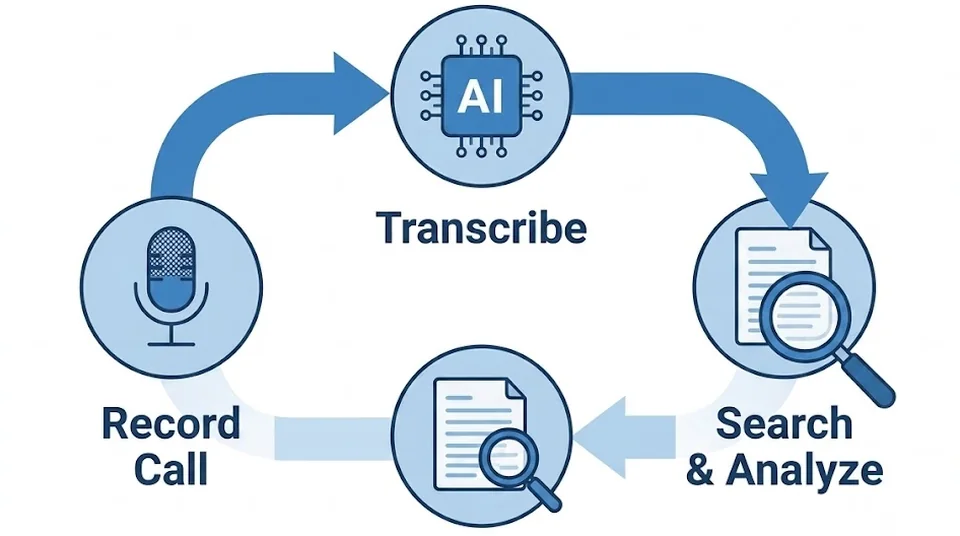
Transcription that runs on the line, not on a file you upload. Epocra records both sides of every call, transcribes it automatically, writes a summary, pulls the follow-ups out as tasks, and files the whole thing under the contact — so the transcript is searchable across your entire history rather than sitting in a folder.
Try Epocra freeSee it in action
See how it works on Epocra
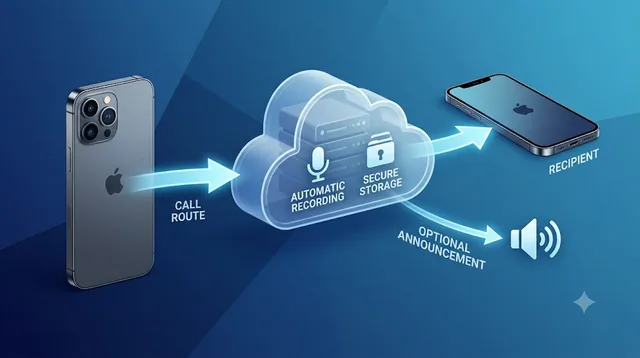
An interactive demo — not a video — of making a call and having it recorded and transcribed. The call ends, and seconds later the recording, transcript and AI summary are waiting — no button pressed, and no announcement mid-call when the notice setting is disabled.
- Recording starts at connect — nothing to interrupt
- Summary and action items after every call
- Filed to the contact, searchable months later
What call transcription actually is
Call transcription is speech-to-text applied to a phone conversation: the audio goes in, and a written record of what was said comes out. That much is now close to a commodity — the accuracy difference between the serious engines is small enough that it is rarely what makes or breaks a transcript in practice.
What varies enormously is the plumbing around it. A transcript is only worth having if it exists for the call you needed, attributes the right words to the right person, and can be found again later. Most of the disappointment people describe comes from one of those three failing, not from the words being wrong.
Why most call transcripts disappoint
It only exists if you remembered
Anything built around uploading a file has the same flaw as a manual record button: the calls you most wish you had a transcript of are the ones you did not know would matter. A quick check-in where a date moves, a number quoted in passing. If transcription starts with you deciding in advance that a call is important, you will miss most of the important ones.
It guesses who was speaking
When both sides of a call are mixed into one audio track, the software has to work out where one speaker ends and the other begins. That is called diarization, and it is a guess — a good one, but a guess that gets noticeably worse when people talk over each other, which on real phone calls they constantly do. A transcript that attributes your client’s commitment to you is worse than no transcript.
You can read it, but you can’t find it
Searching inside a transcript you have already opened is a solved problem. Finding which of four hundred calls contained the sentence is the actual job, and a folder of text files does not do it. This is the difference between having transcripts and having a record.
Ask what happens six weeks after the call. If answering "what did they agree to?" means remembering which call it was, finding the file and reading it, the transcript is an archive. If you can just ask, it is a record.
What Actually Works: Epocra
Two things change, and they are both structural rather than a better speech engine.
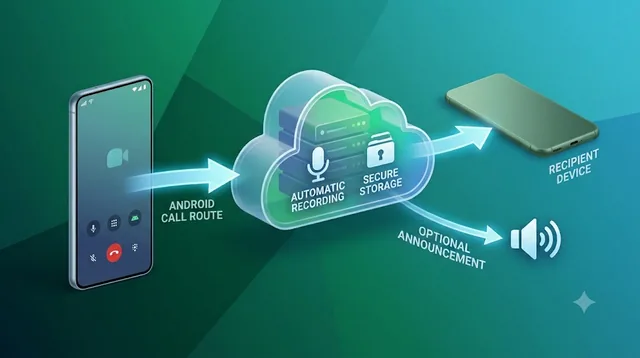
It happens on the line, so it happens every time. Calls route through your Epocra number, and recording starts the moment the call connects. There is no button, no upload, and no decision to make in advance — which means the transcript exists for the call you did not know would matter.
Each side of the call is its own channel, so nothing is guessed. Because the two legs are captured separately rather than mixed together, who said what is a property of the recording itself, not an inference drawn afterwards. Cross-talk stops being a problem, because there is nothing to untangle.
- Automatic on every call — nothing to remember, nothing to upload.
- Both sides, separately captured — speaker attribution is exact, not inferred.
- A summary and the follow-ups — the commitments are pulled out as tasks, so you act on the call instead of re-reading it.
- Searchable across everything — filed under the contact, and the app keeps your transcript history on the phone so it stays searchable with no signal.
You can also just ask. The AI assistant works across your whole call history rather than one call at a time, so "what did I promise Marcus about the disclosure packet?" is a question rather than a search-and-read exercise.
Conference call transcription
Conference calls are where guessed speaker labels fall apart fastest: more voices, more overlap, and often worse audio from people on speakerphone. They are also the calls where the transcript matters most, because nobody takes notes in a meeting they are actively talking in.
The same principle applies. Transcription that happens on the line captures the call as it is carried rather than as a microphone in a room hears it, so the recording quality does not depend on where the phone was sitting. Epocra records calls placed and received through your Epocra number, including calls you have added a second party to.
Phone call transcription on iPhone and Android
Both platforms now have some built-in recording, and both come with the same two catches: the feature announces itself to everyone on the call, and it is not available on every handset, carrier or region.
Transcription specifically is thinner still. On iPhone, an automatic transcript needs Apple Intelligence — the iPhone 15 Pro models and the iPhone 16 line — so most iPhones in use produce a recording with no text at all. Google’s Phone app stores recordings on the device rather than producing a searchable transcript history. We covered both in detail:
- iPhone call recording without the announcement — why iOS announces every recording, and which iPhones transcribe.
- How to record calls on Android — the device and carrier lottery, and why the recorder apps disappeared.
What call transcription costs
Transcription is included on every Epocra plan rather than sold as an add-on — the plans differ only in how much you record.
| Plan | Per month | Recording included |
|---|---|---|
| Beta | Free | Unlimited during beta, no card required |
| Starter | $24.99 | 10 hours (600 minutes) |
| Pro | $49.99 | 25 hours (1,500 minutes) |
| Power | $79.99 | 50 hours (3,000 minutes) |
Every plan includes automatic transcription, the AI summary after each call, follow-ups pulled out as tasks, unlimited AI questions across your history, contact profiles built from your calls, and the desktop, mobile and web apps. Only active recording time counts toward the minutes — using the AI assistant does not.
Every call recorded, transcribed and summarised
Recording starts the moment the call connects — nothing to press, nothing to upload.
Is it legal to transcribe a call?
Transcription itself is not the legally interesting part — the recording is. If you were allowed to record the call, you are generally allowed to keep a written version of it. The rules that matter are the recording rules, and they depend on where everyone on the call is.
Most US states let a participant record a conversation with only their own consent. A smaller group require consent from everyone involved, at least in some circumstances, and calls crossing state lines can bring more than one rule into play. Epocra lets you choose whether a recording notice plays when the call begins; leaving it on is the safest default. Nothing here is legal advice, and if recording is a routine part of how you work it is worth getting a clear answer for the states you operate in.
Frequently asked questions
It is speech-to-text applied to a phone call, producing a written record of what was said. What makes one useful is whether it happens automatically, whether it knows who was speaking, and whether you can find it again later.
Modern engines are close enough that accuracy is rarely the deciding factor. Audio quality matters far more — a call captured on the line is cleaner than a phone recorded through a microphone in a room — as does whether the two speakers were captured separately rather than mixed together.
Yes. Epocra records both sides, and each side is captured separately, so who said what is exact rather than inferred from a single mixed track.
Yes — transcripts are filed under the contact and searchable across your whole history, and you can ask the AI assistant a question across every call rather than opening them one at a time. The app also syncs your transcript history onto the phone, so it stays searchable with no signal.
Partly. An automatic transcript on iPhone needs Apple Intelligence, so it is limited to the iPhone 15 Pro models and the iPhone 16 line. Google’s Phone app keeps recordings on the device rather than building a searchable transcript history.
Included on every Epocra plan. The plans differ in how many minutes of recording they include, not in which features you get.
James Ritter
Founder of Epocra. Fifteen years in payments, now building call intelligence for people who run their business from their phone.
Keep reading